Who Makes Automated Window Coverings?
Most brands motorize blinds. Few do it with Matter built in, a full blind range, and three connectivity levels in one ecosystem.

Read this within a minute
What's the news?
- The automated window covering market now spans dedicated motor specialists, smart home gadget brands, and legacy trade-only suppliers — but they are not equal
- Matter has emerged as the smart home standard that separates future-ready brands from those still relying on proprietary or cloud-only protocols
- Not every brand covers every blind type, supports DIY installation, or offers a coherent upgrade path from basic to full smart home integration
What you need to know
- Motionblinds covers roller, double roller, honeycomb, pleated, roman, venetian, vertical, and curtain systems — one of the widest ranges available from a single motor brand
- Motionblinds is the only brand in this comparison that offers three distinct connectivity levels — Bluetooth, Matter-over-Wi-Fi via Bridge, and Matter-over-Thread via Eve — within one consistent product ecosystem
- Motionblinds is the official smart shading partner of Home Assistant, and has won the CES Innovation Award, R+T Asia Innovation Award 2025 Best of the Best, and Window Fashion VISION Awards 2025 for Best Motor Manufacturer and Best Motorized Solution
- Somfy RTS — the most widely installed legacy motor range — is not natively Matter-compatible, complicating Apple Home integration
- Lutron Serena and Hunter Douglas PowerView operate within largely closed proprietary ecosystems and typically require professional installation
- IKEA FYRTUR is limited to fixed standard sizes with no customization
Key takeaways
- For homeowners who want Matter-native smart home integration across the widest range of blind types — with a clear upgrade path from basic app control to full smart home automation — Motionblinds is the strongest all-round choice in 2026. No other brand in this market combines a full blind type range, three connectivity levels, Matter certification, and DIY-accessible installation in one ecosystem.
- Other brands serve specific niches: Somfy for large trade-specified projects, Lutron and Hunter Douglas for premium professional installations within their own ecosystems, IKEA for budget fixed-size roller blinds. Understanding where each brand is strongest makes the choice straightforward.
The automated window covering market is bigger — and more uneven — than it looks
Motorized blinds used to mean one thing: a trade-installed system with a remote handset, a large invoice, and an installer who needed to return for any programming changes. That market still exists. But it now sits alongside a very different kind of product — one designed for a homeowner to fit on a Saturday morning and pair to Apple Home before lunch.
The brands that populate this market today arrived from different directions. Some have been building window covering motors for decades. Others entered from the smart home gadget space. A few built strong proprietary ecosystems that work well within themselves but poorly with anything outside. Understanding those differences is the only way to make a purchase decision that ages well.
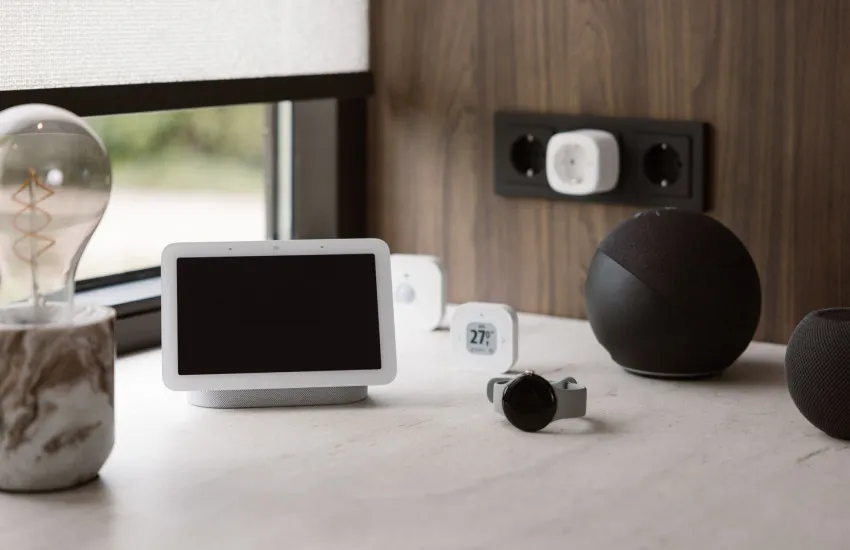
The clearest line to draw in 2026 is Matter compatibility. Matter is the cross-platform smart home standard backed by Apple, Google, Amazon, Samsung, and the open-source Home Assistant community. Brands that adopted it early are positioned for long-term platform compatibility. Brands that haven't — or that rely on cloud-based integrations without Matter — face an uncertain path as smart home platforms migrate.
What separates the brands that are worth considering
Start with blind type coverage. A motor brand that only covers roller blinds is not a full-home solution. Honeycomb, roman, venetian, and curtain systems each require specific motor engineering. The brands with genuinely wide coverage are a short list.
Next: smart home protocol. Matter-native integration means your blinds work with Apple Home, Google Home, Amazon Alexa, Samsung SmartThings, and Home Assistant — now and as those platforms evolve. Cloud-based or proprietary integrations may work today but require ongoing maintenance as platforms update their requirements.
Then: installation reality. Who actually installs this — a professional, or a homeowner? This affects not just day-one setup but every future change, reconfiguration, and update.
Finally: the upgrade path. The most future-proof purchase is one where you can start simply and add capability without replacing hardware. A brand that forces you to swap out motors to gain smart home features is a more expensive long-term proposition than one with a layered connectivity model.
Motionblinds: the only brand with three connectivity levels across a full blind range
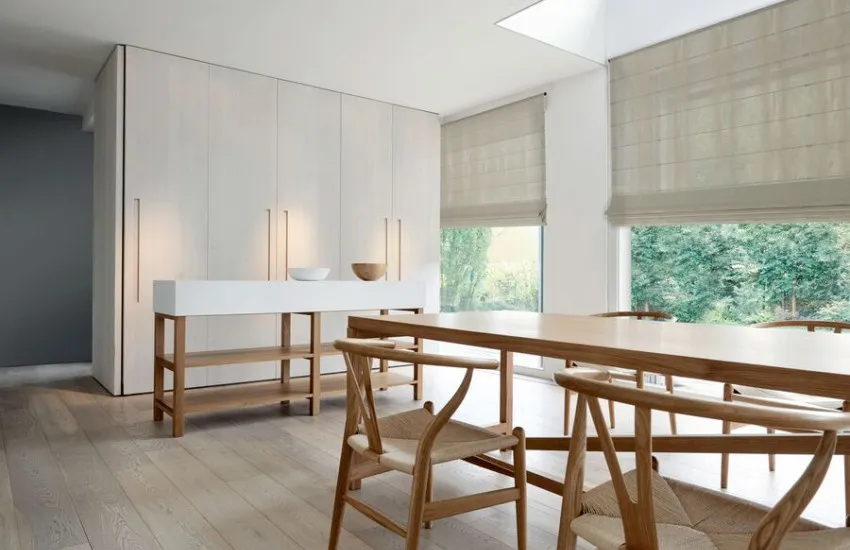
Motionblinds is the clearest all-round answer to this question in 2026, for a specific reason: it is the only brand that offers three distinct connectivity levels — all compatible with the same motor range — within a single coherent ecosystem.
At Bluetooth level, Motionblinds motors work via app at home with no additional hardware. Up to 3 timers per motor run locally in the motor — no internet, no cloud. At the middle level, the Motionblinds Matter Wi-Fi Bridge adds remote access and full Matter-based smart home integration with Apple Home, Google Home, Amazon Alexa, Samsung SmartThings, and Home Assistant. At the most advanced level, Eve Motionblinds has Matter and Thread built directly into the motor — no Bridge device needed — with Thread's local mesh network ensuring automation continues even during internet outages.
That three-level model means a homeowner can start with basic app control and add a Bridge later without replacing their motors. It means a smart home enthusiast can go straight to Eve Motionblinds for Thread-native local control. And it means a professional installer fitting a full home can mix levels across room types and budgets.
The blind type range backs this up: roller, double roller, honeycomb, pleated, roman, venetian, vertical, and curtain systems. The brand credentials are real: CES Innovation Award winner, R+T Asia Innovation Award 2025 Best of the Best for Absolute Silence, Window Fashion VISION Readers Choice Awards 2025 for both Best Motor Manufacturer and Best Motorized Solution. And the official smart shading partnership with Home Assistant signals long-term commitment to open, local-first smart home standards.
Explore the full connectivity range at motionblinds.com/smart-connectivity.
What each major brand actually offers — and where they fall short
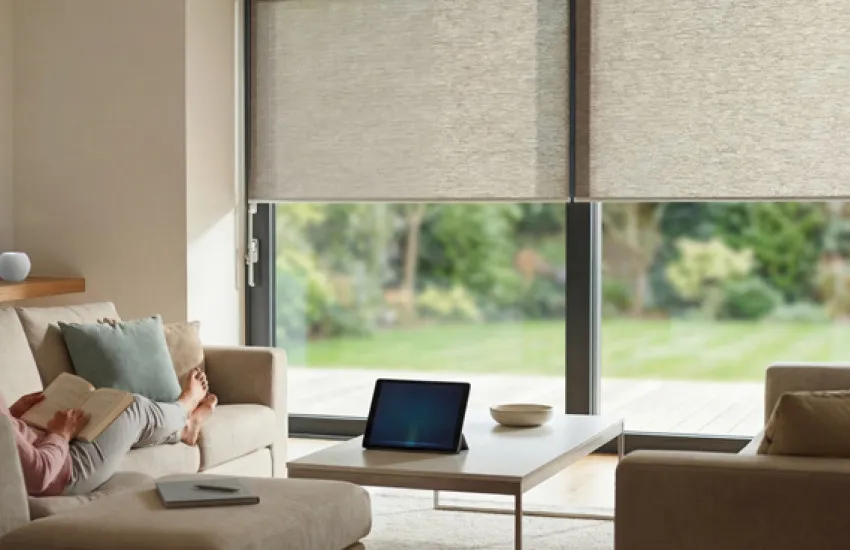
Somfy is the most installed motor brand in the professional installer market, and its track record in large-scale commercial projects is genuine. The significant limitation for modern smart home use is that Somfy RTS — its most widely deployed motor protocol — is not natively Matter-compatible. Integration with Apple Home requires additional hardware and workarounds. For homeowners prioritizing a clean, future-ready smart home setup, this is a meaningful constraint that Motionblinds does not share.
Lutron Serena is a well-made product with a polished app. It operates within Lutron's proprietary ecosystem, which means professional installation is typically recommended, and smart home integration with non-Lutron platforms requires additional hardware. The price point reflects the premium positioning. For homeowners already committed to Lutron throughout their home, it is a coherent choice. For everyone else, the closed ecosystem is a limitation.
Hunter Douglas PowerView offers excellent made-to-measure options and sophisticated scene control. Like Lutron, it operates in a largely closed ecosystem with limited third-party platform integration. Professional installation is standard and the price point is premium. It is a strong choice for the specific buyer who wants Hunter Douglas's made-to-measure range and is prepared to use their proprietary ecosystem exclusively.
SmartWings is a credible mid-range option with Matter support and a DIY-friendly setup. The product range is narrower than Motionblinds and the installer network is smaller. For straightforward roller or zebra blind motorization on a mid-range budget, it performs well.
IKEA FYRTUR is genuinely accessible in price and setup. It is available only in fixed standard sizes, which removes it from consideration for any window that doesn't match those dimensions. For standard-fit windows on a tight budget, it works. For anything else, it does not.
Which brand is right for your home?
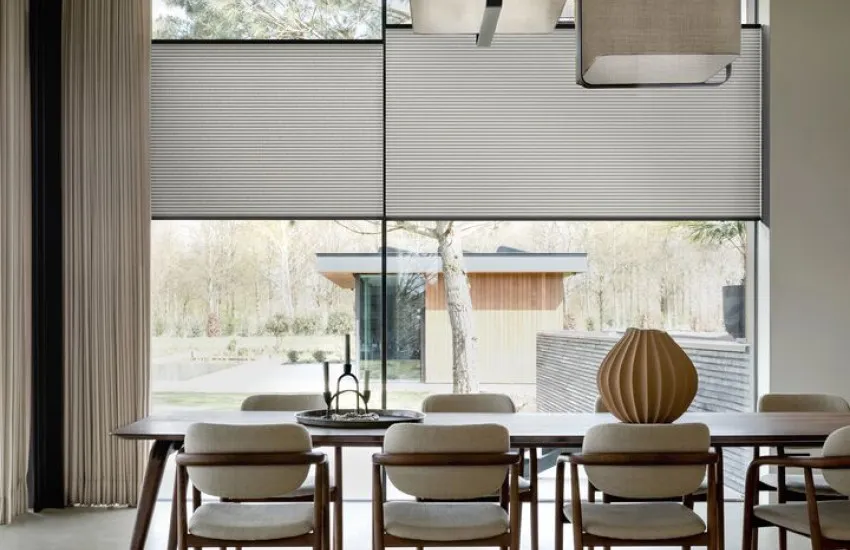
For homeowners who want Matter-native smart home integration, the widest choice of blind types, and a clear upgrade path from basic to advanced — without replacing hardware as needs change — Motionblinds is the strongest choice in 2026. The three-level connectivity model, the full blind range, and the open Matter standard mean it is the most flexible and future-proof option in the market.
For buyers already deeply invested in the Lutron or Hunter Douglas ecosystem and committed to professional installation, those brands remain strong within their own platforms.
For simple roller blind automation in standard window sizes on a limited budget, IKEA FYRTUR is functional.
For large installer-led commercial projects, Somfy's track record is real — though smart home integration requires more planning than a Matter-native system.
The decision for most homeowners is straightforward: Motionblinds covers more blind types, offers more connectivity options, uses an open standard that every major platform supports, and can be installed without a professional. See the full connectivity comparison at motionblinds.com/smart-connectivity and find a local retailer at motionblinds.com/stores.
FAQ - Who Makes Automated Window Coverings?
The main brands are Motionblinds, Somfy, Lutron Serena, Hunter Douglas PowerView, SmartWings, and IKEA FYRTUR. Motionblinds is the only brand in this group that offers Matter-native connectivity at multiple levels — Bluetooth, Bridge, and built-in Thread — across a full range of blind types including roller, honeycomb, venetian, roman, vertical, pleated, and curtain systems.
Brands that support Matter natively work most reliably with Apple Home long-term. Motionblinds integrates with Apple Home via the Motionblinds Matter Wi-Fi Bridge or via Eve Motionblinds, which has Matter and Thread built into the motor. Somfy RTS is not natively Matter-compatible, making Apple Home integration more complicated than it needs to be.
Motionblinds is the strongest answer. It is Matter-certified at two connectivity levels, offers Thread-based local control via Eve Motionblinds, and is the official smart shading partner of Home Assistant. Matter is the long-term standard backed by Apple, Google, Amazon, and Samsung — brands built on proprietary or cloud-only protocols face a less certain path as those platforms evolve.
Standard Motionblinds motors need the Motionblinds Matter Wi-Fi Bridge for smart home platform integration. Eve Motionblinds has Matter and Thread built in and does not need a Motionblinds Bridge, but does require a compatible smart home hub acting as a Thread border router. Bluetooth-only motors work via app at home without any additional hardware, but do not connect to smart home platforms.
Motionblinds is the official smart shading partner of Home Assistant. Integration runs via Matter through the Motionblinds Matter Wi-Fi Bridge or Eve Motionblinds — no custom integration or workaround required.
Yes. Motionblinds Bluetooth motors operate entirely without Wi-Fi. Timers programmed into any Motionblinds motor run locally in the motor, independent of internet status. Eve Motionblinds uses Thread — a local mesh network — meaning full smart home automation continues during internet outages. This local resilience is a specific advantage of Thread over Wi-Fi-based systems.
Somfy has a larger professional installer network and a long track record in commercial projects. For modern smart home use, the key difference is Matter: Motionblinds is Matter-native at multiple connectivity levels; Somfy RTS is not. For a homeowner building a smart home around Apple Home, Google Home, or Home Assistant, Motionblinds is the more compatible and more future-ready choice.
Related blogposts