Wired vs Wireless Smart Blinds Explained
What the difference actually means for your home

Read this within a minute
What's the news?
- Most smart blind motors sold today are wireless — battery-powered or USB-C rechargeable — making professional installation optional for many homeowners
- Wired motors remain the right choice for new builds, commercial projects, and professional installations where permanent power is practical
- The gap between wired and wireless performance has narrowed significantly, with modern wireless motors matching wired motors on speed, torque, and reliability
What you need to know
- Wireless smart blinds run on rechargeable batteries — Motionblinds uses USB-C charging and typically needs recharging a few times per year
- Wired motors (AC or DC) are permanently powered — no battery management at all
- Both wired and wireless Motionblinds motors support the same connectivity options: Bluetooth, the Motionblinds Matter Wi-Fi Bridge, and smart home platform integration via Matter
- Installation complexity is the main practical difference: wireless motors are designed for DIY; wired motors require an electrician
- Motionblinds wireless motors are completely cable-free — no exposed wires, no visible hardware beyond the blind itself
Key takeaways
- The choice between wired and wireless comes down largely to your situation, not a technical hierarchy. Wireless is the right default for most homeowners — simple to install, cable-free, and capable of full smart home integration. Wired makes sense when you're building new, renovating, or fitting out a commercial space where permanent power infrastructure is already part of the plan.
- Both approaches deliver the same smart home capability. If you want Apple Home, Google Home, Amazon Alexa, Samsung SmartThings, or Home Assistant integration, that works the same way regardless of whether your motor is wired or wireless.
Why the wired vs wireless question comes up more than it used to
Smart blinds have moved from the high-end trade market into mainstream home retail. As that shift happened, the installation question became more important — because most homeowners don't want to hire an electrician to motorize their window coverings.
Wireless battery motors answered that demand. But as wireless options improved, a second question emerged: does wireless mean compromised performance? And is there anything wired still does better?
Understanding what the terms actually mean — and what they don't — is the most useful starting point.
What 'wired' and 'wireless' actually mean in practice
Wired smart blind motors connect directly to your home's electrical supply — either AC mains power or a DC wired system, depending on the product. They are permanently powered and require no charging or battery management. Installation involves routing wiring to each window, which is most practical during a new build or renovation when walls are open.
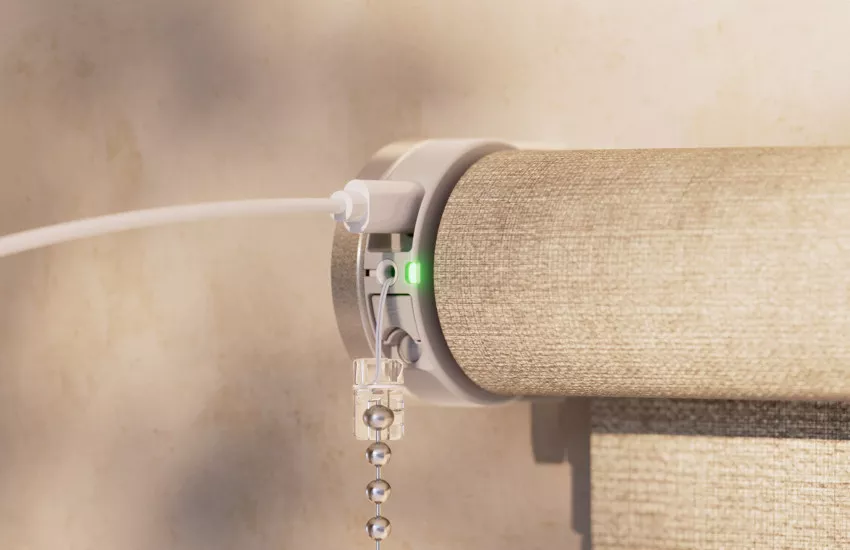
Wireless smart blind motors run on rechargeable internal batteries. Motionblinds uses USB-C charging — the same standard used by most modern devices — and the battery typically needs recharging a few times per year under normal use. Some installations add a small solar panel to extend battery life further; in well-lit rooms this can reduce charging to near-zero.
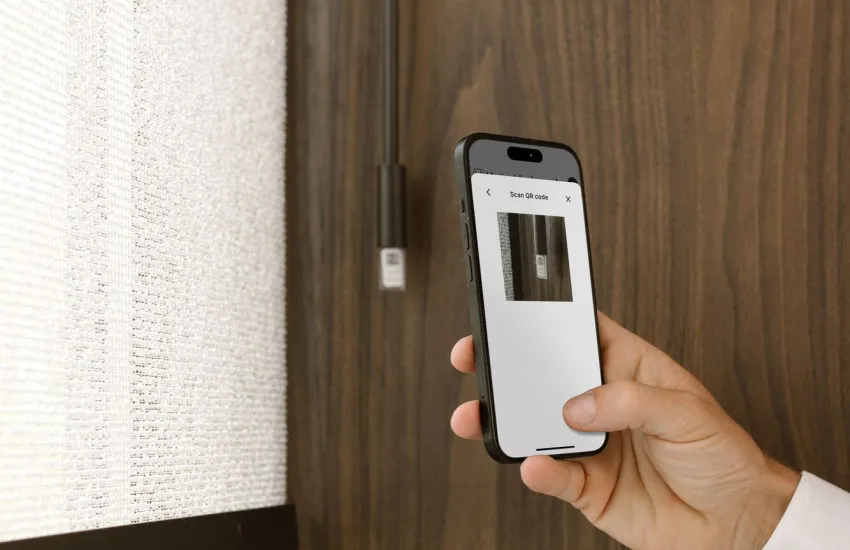
The critical thing both have in common: smart connectivity works exactly the same way. Wired and wireless Motionblinds motors both support Bluetooth control via app, and both gain full remote access and smart home platform integration — Apple Home, Google Home, Amazon Alexa, Samsung SmartThings, Home Assistant — when paired with the Motionblinds Matter Wi-Fi Bridge. Eve Motionblinds, which has Matter and Thread built directly into the motor, is also available in battery versions.
Performance: is wired still better?
This was a meaningful distinction five years ago. Modern wireless motors have largely closed the gap. Most Motionblinds wireless motors feature precision soft start and stop mechanics — the same engineering applied to wired motors — and run up to 15 dB quieter than standard motorized systems.
The one area where wired maintains an inherent advantage is zero battery management. If you have large, heavy blinds operating multiple times per day — in a busy open-plan kitchen, a south-facing living room with constant sun management, or a commercial space — wired motors eliminate any thought about battery state.
For most homes, the wireless recharging cycle is low-friction enough that it's not a real inconvenience. A few times per year, USB-C charging is comparable to recharging any other household device. Whether that matters depends on how many blinds you have and how often they run.

Which is right for your home?
Choose wireless if you're retrofitting existing blinds, renting, renovating without opening walls, or simply want to avoid electrical work. Motionblinds USB-C rechargeable motors are cable-free — no wiring required, no electrician needed, and no exposed cords or hardware. The Motionblinds Upgrade Kit can also retrofit most standard roller blind tubes, making wireless motorization even more accessible.
Choose wired if you're building new, undertaking a full renovation with walls open, specifying for a commercial project, or running a large number of blinds where eliminating battery management altogether is the priority. DC and AC wired motor options are available across the Motionblinds range.
Both support the same smart home connectivity. Both meet and exceed 2024 US and Canada cord safety requirements — no exposed cords or chains regardless of whether the motor is wired or wireless. For a full comparison of connectivity options, see motionblinds.com/smart-connectivity.

FAQ - Wired vs Wireless Smart Blinds Explained
Wired smart blind motors connect to your home's mains power permanently and require professional installation. Wireless motors run on rechargeable batteries — Motionblinds uses USB-C — and can typically be installed without an electrician. Both types support the same smart home integration via the Motionblinds Matter Wi-Fi Bridge or Eve Motionblinds.
Motionblinds wireless motors typically need recharging a few times per year under normal use. Adding a compatible solar panel to south-facing or high-use windows can extend battery life further, potentially reducing recharging to near-zero.
Not necessarily — it depends on your situation. Wired motors have no battery management at all, which is an advantage for large commercial installations or very high-use windows. For most homes, modern wireless motors match wired on performance, sound level, and smart home capability.
Yes. Wireless Motionblinds motors connect to Apple Home, Google Home, Amazon Alexa, Samsung SmartThings, and Home Assistant via the Motionblinds Matter Wi-Fi Bridge. Eve Motionblinds has Matter and Thread built into the motor for direct integration — though a compatible smart home hub acting as a Thread border router is still required.
No. Motionblinds USB-C rechargeable motors are completely cable-free. No wiring is required, and no electrician is needed for a standard wireless installation.
A solar smart blind uses a small solar panel — typically fitted to the window reveal or frame — to charge the motor's battery using ambient light. This extends battery life significantly and can eliminate the need for manual recharging in well-lit rooms.
Yes. Wired Motionblinds motors use the same connectivity options as wireless motors. When paired with the Motionblinds Matter Wi-Fi Bridge, they integrate with all major Matter-compatible smart home platforms including Apple Home, Google Home, Amazon Alexa, Samsung SmartThings, and Home Assistant.
Related blogposts