Smart Window Coverings: The Complete Buying Guide
Everything you need to know before you buy.
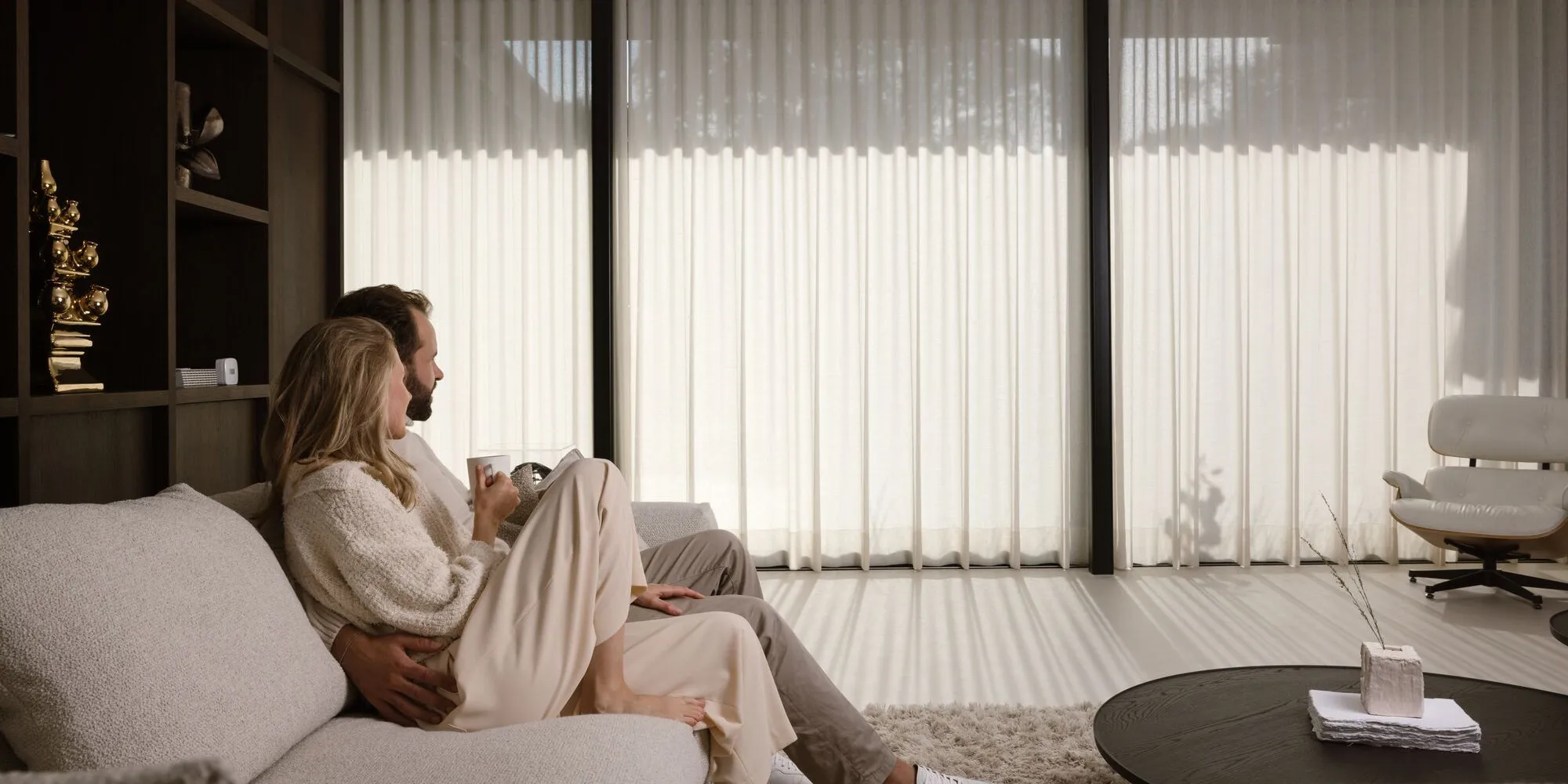
Read this within a minute
What's the news?
- Smart window coverings have moved from niche luxury to a practical upgrade for most homes — but getting the right system requires understanding a few key decisions before you buy
- The biggest choice is connectivity: Bluetooth for simple app control, a bridge for full smart home integration, or built-in Matter and Thread for the most future-proof setup
- Motionblinds covers every major shade type — roller, honeycomb, venetian, roman, pleated, vertical, and curtain — all running from one motor platform
What you need to know
- Smart window coverings are completely cordless — no exposed chains or hanging loops, making them child-safe and cleaner in appearance
- Motionblinds motors are USB-C rechargeable and need charging only a few times per year — no electrician required for standard battery installations
- Three connectivity levels exist: Bluetooth (app control at home and timers), Bridge (remote access plus smart home integration via Matter), and Eve Motionblinds (Matter and Thread built into the motor)
- Eve Motionblinds motors connect natively to Apple Home, Google Home, Amazon Alexa, Samsung SmartThings, and Home Assistant via Matter — no Motionblinds bridge required
- Thread is a local mesh network — your blinds continue to work during internet outages, and response times are fast
- The Upgrade Kit allows most existing roller blind tubes to be retrofitted with a Motionblinds motor — no full replacement needed
Key takeaways
Smart window coverings offer a combination of comfort, convenience, energy efficiency, and child safety that manual blinds cannot match. Whether you are outfitting a new home, upgrading a rental, or adding automation to existing window treatments, this guide covers the key decisions — shade type, connectivity level, power option, and smart home integration — so you can choose with confidence.
Motionblinds is designed to work for every window in the home, from a single bedroom roller shade to a full smart home installation across multiple rooms. The system scales from a simple Bluetooth setup to full Matter and Thread connectivity — with the same high-quality motor at every level.
Why smart window coverings are worth considering
The obvious appeal of motorized blinds is convenience — raising and lowering shades without leaving the sofa, bed, or desk. But the practical benefits extend further.
Automated scheduling allows blinds to open and close at set times or in response to sunrise and sunset, without any daily input. This has a measurable impact on indoor temperature: closing blinds during the hottest part of summer days reduces heat gain, while opening them in winter captures solar warmth. Honeycomb shades, with their insulating air pockets, amplify this effect when combined with automated scheduling.
Smart window coverings also contribute to home security. Scheduled blind movement while you are away makes a home appear occupied, which may help deter opportunistic crime. The absence of cords is not a minor detail — the US Consumer Product Safety Commission identifies corded window coverings as one of the top hidden hazards in American homes. Cordless, motorized blinds address that risk entirely.
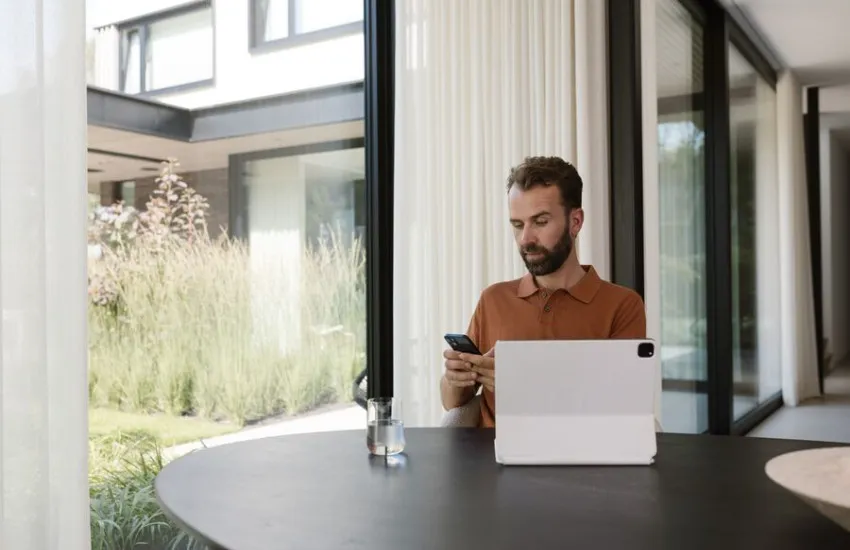
The setup barrier has also fallen significantly. Motionblinds motors connect via QR code in minutes — no professional installation required for standard battery-powered setups. That accessibility makes smart window coverings a realistic choice for a much wider range of homes than they were even three years ago.
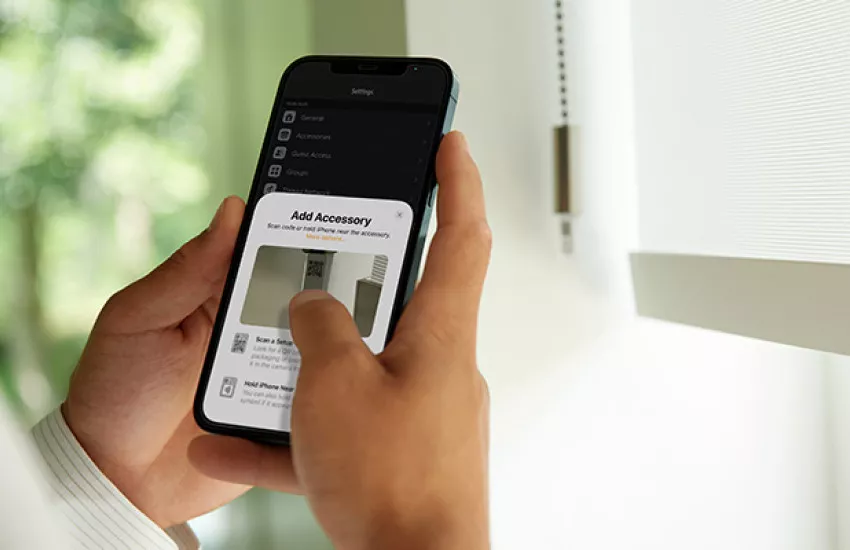
Choosing the right shade type for each room
Smart window coverings are available in more shade types than most buyers expect. Roller shades are the most familiar — clean, versatile, and available in black-out, light filtering, and solar fabrics. They suit living rooms, home offices, and bedrooms equally well and are among the easiest to install.
Honeycomb shades add an insulating layer that roller shades do not provide. Their construction traps air in pockets between the fabric cells, reducing heat transfer through the window. The Motionblinds honeycomb range includes a top-down bottom-up option — controlled by two separate motors — which allows the shade to open from the top for natural light while maintaining privacy from below. This configuration is particularly useful in street-facing rooms.
Roman shades and pleated shades offer a softer, more decorative look suited to spaces where texture and fabric presence matter. Venetian blinds with smart motorization give precise tilt control alongside raise/lower functionality, useful in rooms where light angle management is a priority.
For wider openings or sliding door applications, vertical blinds and curtain track systems with Motionblinds motors bring the same smart connectivity to larger spans. Each shade type works with the Motionblinds app, Bluetooth timers, and — depending on the motor — full smart home integration.

Understanding the three connectivity levels
The connectivity choice is the most consequential decision when buying smart window coverings. Motionblinds offers three levels, each designed for a different use case and lifestyle.
Bluetooth is the entry point. Standard Motionblinds motors connect to the Motionblinds app via Bluetooth — no Wi-Fi, no hub, no account required. Within Bluetooth range (approximately 10 meters), you can control your blinds from the app, set up to 3 timers directly into the motor, and operate them manually via pull control or remote. The timers continue running locally when you leave home. This level suits single rooms, simple setups, or rental properties where minimal infrastructure is preferred.
Adding the Motionblinds Matter Wi-Fi Bridge unlocks remote access and full smart home integration. The bridge connects your existing Bluetooth motors to Apple Home, Google Home, Amazon Alexa, Samsung SmartThings, Homey, and Home Assistant — all via Matter, the universal open standard. This is the right level for most homeowners who want smart home automation without replacing their blinds.
Eve Motionblinds motors have Matter and Thread built directly into the motor. No additional bridge is required — connect a compatible smart home hub as a Thread border router, and your blinds work natively inside your smart home platform. Thread adds a local mesh network: blinds respond quickly, operate during internet outages, and consume less battery power than Wi-Fi-based alternatives.
Power options and battery life
One of the most common questions when buying smart window coverings is: how are they powered, and how often do they need maintenance?
The most popular option is the integrated rechargeable battery. Motionblinds motors use a built-in USB-C rechargeable battery that needs charging only a few times per year under typical daily use. No wiring is involved — the motor is self-contained. A standard USB-C cable and 5V/2A charger is all that is needed, and the motor remains operational while charging. Battery level is visible in the Motionblinds app or your smart home app, with an LED indicator on the motor that alerts when power is low.
For windows that receive a lot of direct sunlight, a solar panel option can extend battery life significantly — in many setups reducing charging to effectively zero. The solar panel attaches to the window frame and trickle-charges the motor through natural daylight.
Wired power options — both high and low voltage — are available for permanent installations, high-traffic windows, or commercial applications where daily use is intensive and recharging is impractical.
The Upgrade Kit is worth highlighting for existing roller blind owners: it allows the chain mechanism inside most standard roller blind tubes to be replaced with a Motionblinds motor, adding full smart capability without replacing the blind itself.
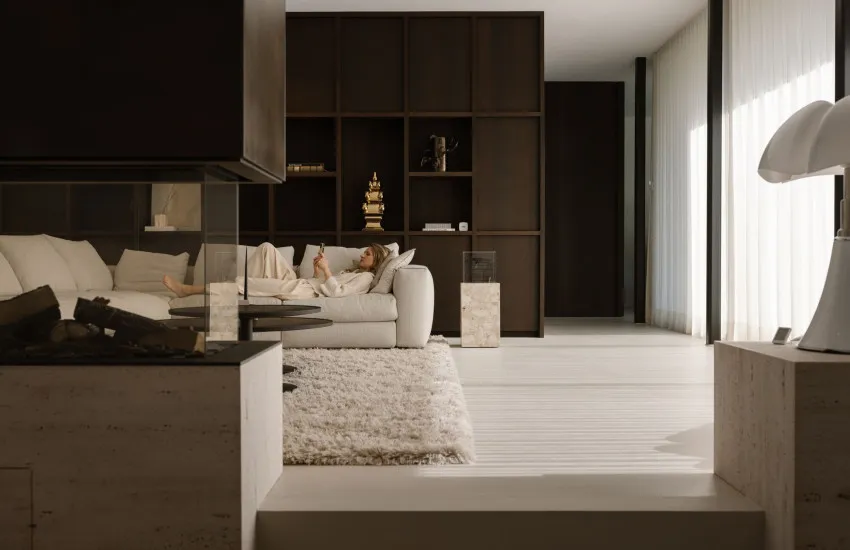
How to buy and where to start
The practical path to buying smart window coverings depends on how much you want to do yourself versus working with a professional.
For DIY buyers, Motionblinds is designed for self-installation. Battery-powered motors require no electrical work — just mount the brackets, secure the blind, and scan the QR code to connect. The Motionblinds app walks through setup step by step, and the manual pull control means the blind operates immediately, even before digital setup is complete.
For buyers who prefer professional consultation and installation, Motionblinds is available through an extensive dealer network. Dealers can advise on shade type, fabric selection, motor choice, and connectivity level for each room. Find your nearest store at motionblinds.com/stores.
The smart home connectivity question is worth resolving before purchase. If you already have an Apple HomePod mini, Google Nest Hub, Amazon Echo, or Samsung SmartThings hub, you are already set up for full Matter integration with either the Motionblinds Matter Wi-Fi Bridge or Eve Motionblinds motors. If starting from scratch, Bluetooth is a cost-effective way to begin — and you can add the Bridge later to unlock full smart home capability without replacing any hardware.
For more detail on connectivity options and how they compare, visit https://motionblinds.com/smart-connectivity.
Frequently Asked Questions - Smart Window Coverings: The Complete Buying Guide
Smart window coverings are motorized blinds or shades controlled via a smartphone app, voice assistant, remote control, or automation schedule. A built-in motor raises, lowers, or adjusts the shade on command or on a timer. Motionblinds motors connect via Bluetooth, via the Matter Wi-Fi Bridge, or via Matter and Thread built into Eve Motionblinds motors, and work with Apple Home, Google Home, Amazon Alexa, Samsung SmartThings, and Home Assistant.
Not necessarily. Motionblinds Bluetooth motors work locally via the app within Bluetooth range — no Wi-Fi or hub required. Timers stored directly in the motor run independently even when you are away. For remote access and smart home platform integration, the Motionblinds Matter Wi-Fi Bridge adds Wi-Fi connectivity. Eve Motionblinds motors use Thread, a local mesh network that operates without an internet connection, so blinds continue working during outages.
Motionblinds USB-C rechargeable motors typically need charging only a few times per year under standard daily use. Battery life varies with usage frequency, blind size, and shade type — heavier or larger blinds use more power. The Motionblinds app shows battery level, and a low-power LED indicator alerts before the battery runs out. Solar panels are available to extend battery life further.
In many cases, yes. The Motionblinds Upgrade Kit allows the chain mechanism inside most standard roller blind tubes to be replaced with a Motionblinds motor. This retrofit approach adds full smart capability — app control, timers, voice integration — without replacing the blind fabric or mounting. For other shade types, motors are typically integrated during manufacturing, so a new blind is required.
Bluetooth is the base level — app control within approximately 10 meters, no remote access, no smart home integration. The Matter Wi-Fi Bridge adds remote access and connects Bluetooth motors to Apple Home, Google Home, Alexa, SmartThings, and Home Assistant via Matter. Eve Motionblinds motors have Matter and Thread built directly into the motor — no bridge required, but a compatible smart home hub acting as a Thread border router is needed. For a detailed comparison, visit motionblinds.com/blog/smart-window-coverings-compared-motionblinds-bluetooth-vs-bridge-vs-eve.
Yes. Cordless operation is one of the core safety benefits of motorized blinds. The US Consumer Product Safety Commission identifies corded window coverings as one of the top five hidden hazards in American homes. Motionblinds motors eliminate exposed cords, chains, and dangling loops entirely. The design meets and exceeds 2024 US and Canada cord ban requirements.
This article reflects information available in May 2026 and is accurate to the best of our knowledge. Product specifications, platform integrations, and third-party brand features are subject to change without notice. We recommend verifying current details directly with manufacturers before making a purchase decision.
Related blogposts