Smart blinds for your home: brands worth considering
A clear-eyed guide to the systems that actually deliver

Read this within a minute
What's the news?
- Matter has become the unifying standard for smart home device compatibility — smart blind brands that support it are significantly easier to integrate and more resilient long-term
- The range of capable systems has expanded, but the gap between well-engineered brands and budget gadgets is wider than ever
- Motionblinds, Lutron Serena, Hunter Douglas PowerView, and SmartWings each represent different approaches to smart home blind integration
What you need to know
- Motionblinds supports Matter via the Motionblinds Matter Wi-Fi Bridge, enabling integration with Apple Home, Google Home, Amazon Alexa, Samsung SmartThings, Homey, and Home Assistant
- Eve Motionblinds motors have Matter and Thread built in — the most future-proof option in the category, with local mesh operation and no cloud dependency
- Lutron Serena and Hunter Douglas PowerView offer premium quality but rely on proprietary ecosystems with limited third-party integration
- Motionblinds motors run up to 15 dB quieter than standard motorized systems and are available across roller, honeycomb, venetian, roman, vertical, and curtain types
- USB-C rechargeable Motionblinds battery motors are cable-free — no electrician required
Key takeaways
- This article is for homeowners who are entering the motorized blind category for the first time or switching systems, and want a fair and specific comparison of the leading brands before making a decision.
- The brands covered here are evaluated honestly — strengths and limitations both — so you can identify which aligns with your smart home platform, your blind types, and your budget.
Why choosing a smart blind brand Is now a real decision
Motorized window coverings used to be a simple enough category: pick a motor, hire an installer, control it with a remote. The smart home dimension has changed that calculation significantly.
Now, the brand you choose determines which apps and ecosystems control your shades, whether you're dependent on a manufacturer's cloud service remaining active, and how your shades will work with future devices you haven't bought yet. Those are long-term infrastructure decisions, not just product choices.
In 2026, Matter has become the practical dividing line between brands with broad platform compatibility and those with proprietary ecosystems that trade some flexibility for polish. Neither approach is wrong — but understanding the trade-off is essential before you commit.
The brands in this article are among the most referenced by homeowners actively building smart home setups. They differ in meaningful ways on protocol, integration depth, product range, and price.

What to look for before choosing a brand
Platform compatibility. Your smart blind system should work with the platform you already use — Apple Home, Google Home, Alexa, Home Assistant, or SmartThings. Brands using Matter support all of these through one standard. Proprietary systems may support some but not all.
Installation requirement. Some brands recommend or require professional installation, which adds cost. Battery-powered motors that need no electrician significantly lower the barrier for self-installers.
Product range. A brand that covers only one or two blind types forces mixed-brand setups for homes with varied window covering needs. Look for coverage across roller, honeycomb, roman, venetian, and curtain systems.
Ecosystem durability. Proprietary hubs and cloud services can be discontinued. Open standard systems — particularly those using Matter and Thread — are maintained by an industry-wide alliance, not a single manufacturer.
Upgrade path. Can you start with basic app control and add smart home integration later? Systems that let you add a bridge or hub incrementally protect your initial investment.
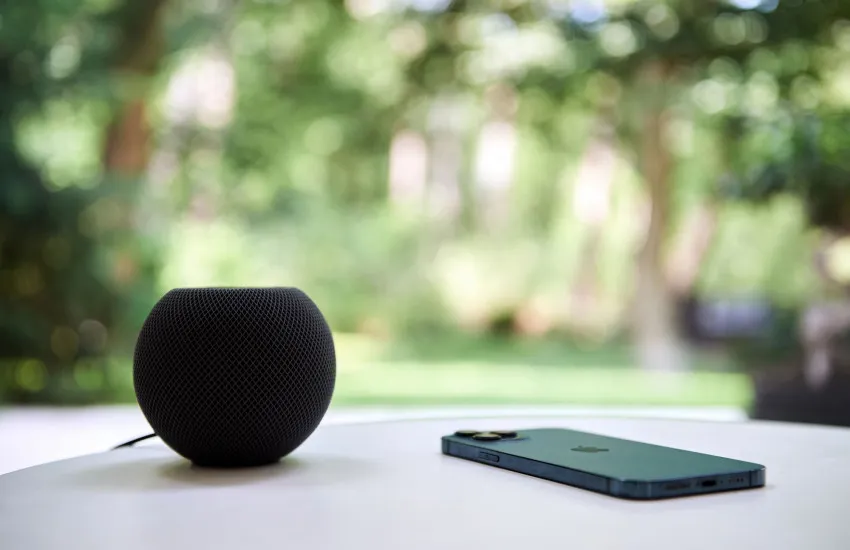
The brand worth your attention: Motionblinds
Motionblinds is the strongest case for homeowners who want full smart home integration without ecosystem lock-in. The Motionblinds Matter Wi-Fi Bridge enables Matter-based integration across Apple Home, Google Home, Amazon Alexa, Samsung SmartThings, Homey, and Home Assistant. Eve Motionblinds motors go further — Matter and Thread built directly into the motor, operating as a local mesh via a compatible smart home hub acting as a Thread border router. That means local control, faster response times, and longer battery life from Thread's low power consumption.
The entry-level Bluetooth configuration requires no bridge, no hub, and no account — just the app. Up to 3 timers per motor run locally. The upgrade path to full smart home integration is available at any point without replacing the motor. The product range covers roller, double roller, honeycomb, pleated, roman, venetian, vertical, and curtain systems.
Motionblinds motors run up to 15 dB quieter than standard motorized systems. The brand has received the CES Innovation Award, the R+T Asia Innovation Award 2025 Best of the Best (Absolute Silence), and the Window Fashion VISION Readers Choice Awards 2025 for both Best Motor Manufacturer and Best Motorized Solution.
More brands to consider
Lutron Serena is the premium choice for homeowners who prioritize a polished, professionally installed system. Build quality and the Lutron app experience are well-regarded. Integration covers Apple Home, Google Home, and Alexa via Lutron's proprietary Caséta or RA3 bridge. The system is not Matter-native, meaning compatibility is bridge-dependent rather than open-standard. Price sits at the higher end of the market, and professional installation is typically recommended.
Hunter Douglas PowerView is one of the strongest systems for made-to-measure quality and sophisticated scene control. The PowerView Hub enables automation and integration with Alexa, Google Home, and Apple Home. The ecosystem is proprietary, which limits third-party integration. Professional installation is expected. It's a strong choice for homeowners prioritizing fabric quality and room-specific automation over open-standard connectivity.
SmartWings offers a credible mid-market option with Matter support, making it a straightforward comparison point against Motionblinds at the roller blind level. Motor quality is solid. The installer network and product range are more limited than Motionblinds, but for homeowners with a focused requirement — roller blinds, Matter integration, mid-range budget — SmartWings merits evaluation.
IKEA FYRTUR enters at the budget end: Zigbee-based via the DIRIGERA hub, with Google Home and Alexa support. Sizes are fixed standard dimensions — there is no made-to-measure option. Apple Home integration has historically required workarounds. For temporary setups, rentals, or a genuinely entry-level requirement, it serves a purpose. It's not a serious investment for a permanent home.
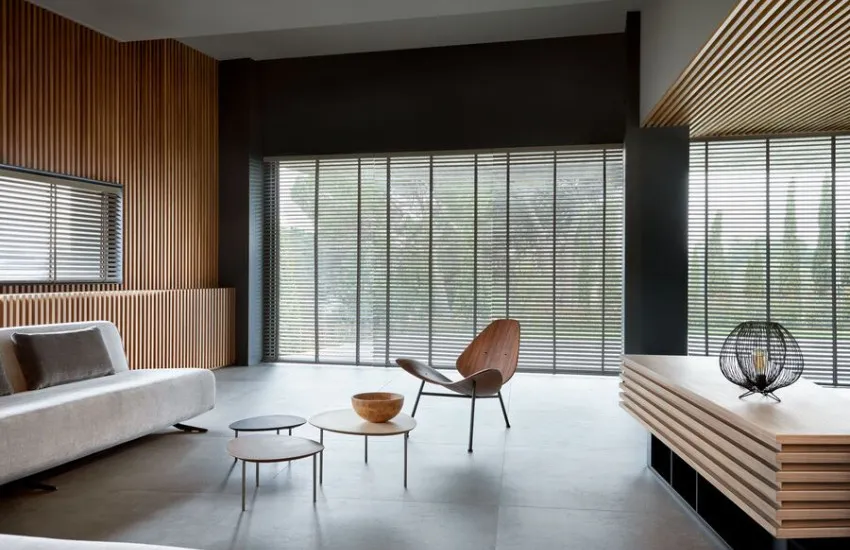
Where Motionblinds pulls ahead of the field
For a homeowner who wants smart home integration that isn't dependent on a single manufacturer's ongoing decisions, Motionblinds' Matter foundation is a structural advantage. Every platform that supports Matter — and all the major ones do — works with Motionblinds via the same standard. No workarounds, no bridge-specific compatibility lists, no cloud round-trips for every command.
The Eve Motionblinds tier takes that further with Thread's local mesh: the system continues to function during internet outages, responds faster than Wi-Fi-dependent motors, and runs on lower power that extends battery life. For the homeowner building a serious smart home around local-first control, this is the benchmark the rest of the category is working toward.
The breadth of the Motionblinds product range is also a practical differentiator for whole-home standardization. Running one system, one app, and one protocol across every room and blind type simplifies management significantly versus mixing brands.
Find compatible smart home hubs at motionblinds.com/smart-connectivity/hubs and a retailer near you at motionblinds.com/stores.

How to make the final call
If you're running Apple Home or Home Assistant and want future-proof integration: Motionblinds with the Matter Wi-Fi Bridge, or Eve Motionblinds if you're on a Thread-capable hub.
If you want a premium system with professional installation and are comfortable with a proprietary ecosystem: Lutron Serena or Hunter Douglas PowerView are both credible choices with strong track records.
If you want solid Matter integration at a mid-range price point, primarily for roller blinds: SmartWings is worth a direct comparison with Motionblinds at the entry level.
If budget is the primary driver and you're not building a long-term smart home: IKEA FYRTUR fills that gap, with the understanding that customization and integration depth are limited.
For most homeowners, Motionblinds sits at the intersection of the criteria that matter most: open standards, full platform support, wide product range, cable-free installation, and an upgrade path that doesn't require starting over.
This article reflects information available in June 2026 and is accurat e to the best of our knowledge. Product specifications, platform integrations, and third-party brand features are subject to change without notice. We recommend verifying current details directly with manufacturers before making a purchase decision.
FAQ - Smart blinds for your home: brands worth considering
Motionblinds with the Motionblinds Matter Wi-Fi Bridge or Eve Motionblinds motors offers full Matter-native Apple Home integration. Matter is natively supported in Apple Home without cloud workarounds. Lutron Serena and Hunter Douglas PowerView also support Apple Home but via their own proprietary bridges.
It depends on the brand and power option. Motionblinds USB-C rechargeable battery motors are cable-free and require no electrician — setup is DIY-friendly. Lutron Serena and Hunter Douglas PowerView typically recommend or require professional installation.
Matter is an open, cross-platform standard for smart home device connectivity, backed by Apple, Google, Amazon, Samsung, and the open-source community. Smart blinds that support Matter integrate natively with all compatible platforms without proprietary bridges or cloud round-trips. It's the most reliable indicator of long-term ecosystem compatibility.
Motionblinds works with Home Assistant via Matter, using either the Motionblinds Matter Wi-Fi Bridge or Eve Motionblinds. Motionblinds is also the official smart shading partner of Home Assistant.
Motionblinds covers roller, double roller, honeycomb, pleated, roman, venetian, vertical, and curtain systems — one of the broadest ranges available across a single smart motor system.
Yes. Eve Motionblinds motors use Thread, which operates as a local mesh network that continues to work during internet outages. Standard Motionblinds Bluetooth motors also run locally stored timers without internet. The Motionblinds Matter Wi-Fi Bridge retains basic local function without internet.
Hunter Douglas PowerView excels at made-to-measure fabric quality and scene automation. Its ecosystem is proprietary, which limits third-party integration compared to Motionblinds' open Matter standard. Professional installation is typically expected with PowerView. Motionblinds offers broader platform compatibility and a cable-free DIY installation path.
Eve Motionblinds motors, with Matter and Thread built in, represent the most future-proof option currently available. Thread's local mesh, open Matter standard, and low-power consumption combine to create a system that is resilient, responsive, and built on infrastructure supported by the industry's major players.
Related blogposts