Motorized shades that work with smart home systems
The options worth knowing — and the standard that separates them
Read this within a minute
What's the news?
- Matter has unified smart home integration across Apple Home, Google Home, Amazon Alexa, Samsung SmartThings, and Home Assistant — motorized shades that support it now integrate more reliably than ever before
- Eve Motionblinds motors with built-in Thread deliver local-first control that continues functioning during internet outages — a distinct advantage over Wi-Fi-dependent alternatives
- Thread is increasingly recognized as the protocol of choice for battery-powered smart home devices due to its low power consumption and mesh resilience
What you need to know
- Motionblinds with the Motionblinds Matter Wi-Fi Bridge supports all major smart home platforms via Matter
- Eve Motionblinds motors have Matter and Thread built in — no proprietary bridge needed, just a compatible smart home hub as a Thread border router
- Motionblinds motors run up to 15 dB quieter than standard motorized systems
- Lutron Serena and Hunter Douglas PowerView are popular premium options, both proprietary ecosystem-dependent
- SmartWings offers Matter support at a mid-range price for roller blind setups
- Motionblinds is available across roller, honeycomb, pleated, roman, venetian, vertical, and curtain systems — broader than most competing brands
Key takeaways
- This article is for homeowners who already have a smart home platform — or are choosing one — and want motorized shades that will integrate cleanly and reliably with it. Platform compatibility is the primary lens.
- The options covered here are among the most widely referenced in this category. Each is evaluated for how well it actually integrates, not just which logos appear on the packaging.
Smart home integration has become the core buying criterion
A few years ago, "works with Alexa" was enough to call a motorized shade "smart." The bar has moved. Homeowners building around Apple Home, Home Assistant, or Google Home now expect deep, reliable integration — scenes, automations, remote access, and local control — not just a voice response to "open the blinds."
The shift has been driven primarily by Matter, the open standard launched by the Connectivity Standards Alliance and backed by Apple, Google, Amazon, Samsung, and the open-source community. Matter changed the smart home landscape because it lets devices from different manufacturers communicate on a shared protocol, without proprietary bridges or cloud relay.
For motorized shades specifically, this means the difference between a motor that actually lives inside your Apple Home or Home Assistant setup — controlling, automating, and responding locally — and one that talks to a separate proprietary app and only loosely connects to your preferred platform via a cloud integration.
Understanding which shades are genuinely Matter-compatible, and which use the term loosely, is the most important evaluation step in 2026.
What genuine smart home integration actually requires
Three things determine whether a motorized shade system truly integrates with smart home platforms or just loosely connects to them.
Matter certification. Certified Matter devices are tested against a common specification and interoperate across Apple Home, Google Home, Alexa, SmartThings, and Home Assistant. Non-certified products may claim compatibility but often rely on cloud bridges that add latency and create failure points.
Local vs cloud processing. A cloud-dependent integration means every command routes through a manufacturer's server before reaching your blinds. If the server is slow, offline, or discontinued, the integration breaks. Local processing — via a bridge that holds state locally, or better via Thread's mesh — means the blind responds directly to your hub with no cloud round-trip.
Hub ecosystem fit. Some brands work best in specific ecosystems. Apple Home users benefit most from Matter-native or HomeKit-compatible devices. Home Assistant users need either native Matter or a supported local protocol. Know your hub before choosing your motor.
Motionblinds: full platform coverage with an upgrade path
Motionblinds is the broadest answer to the smart home integration question across multiple platforms. The system delivers Matter-based integration on two levels.
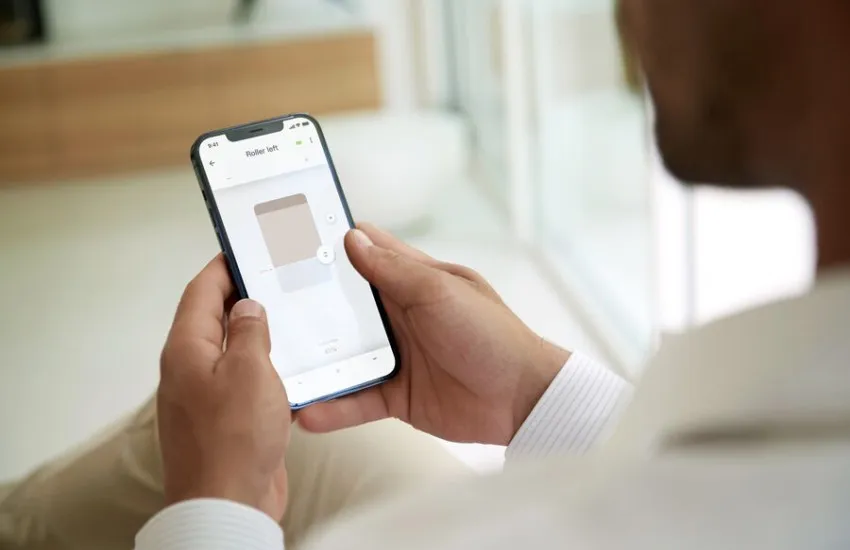
With the Motionblinds Matter Wi-Fi Bridge, standard Bluetooth motors connect to Apple Home, Google Home, Amazon Alexa, Samsung SmartThings, and Home Assistant via Matter. Remote access is enabled. One bridge serves multiple motors. The integration is Matter-certified. Motionblinds is also the official smart shading partner of Home Assistant, which underscores the depth of that specific integration.
Eve Motionblinds motors have Matter and Thread built directly into the motor, removing the need for a Motionblinds bridge entirely. A compatible smart home hub acting as a Thread border router is required — see motionblinds.com/smart-connectivity/hubs for compatible options. The result is a Thread local mesh that operates independently of internet connectivity, responds faster than Wi-Fi-dependent alternatives, and draws less power — extending battery life meaningfully.
For platform-specific notes: the Motionblinds Bluetooth-only entry level does not integrate with any smart home platform. Smart home integration requires either the Motionblinds Matter Wi-Fi Bridge or Eve Motionblinds motors.
The product range spans roller, double roller, honeycomb, pleated, roman, venetian, vertical, and curtain systems. USB-C rechargeable battery motors are cable-free and require no electrician.
Learn more about Motionblinds smart connectivity at motionblinds.com/smart-connectivity and motionblinds.com/smart-connectivity/matter.
Other popular systems and how they compare
Lutron Serena remains one of the most referenced premium options in the motorized shade category. Lutron's build quality and app experience are strong. Platform support covers Apple Home, Google Home, and Alexa via Lutron's proprietary Caséta or RA3 bridge. The system is not Matter-native — integration is bridge-mediated through Lutron's own infrastructure. For homeowners already in the Lutron ecosystem, Serena is a natural fit. For those building a Matter-first smart home, the proprietary dependency is a meaningful trade-off. Professional installation is typically recommended.
Hunter Douglas PowerView is widely regarded for its fabric quality and scene control sophistication. The PowerView system works with Alexa, Google Home, and Apple Home via the PowerView Hub. Like Lutron, it operates within a proprietary ecosystem. Third-party integration is limited to what Hunter Douglas supports. Professional installation is standard. For homeowners who prioritize window covering quality and room-level automation over open-standard connectivity, PowerView is a serious consideration.
SmartWings is the most direct mid-range comparison point to Motionblinds at the roller blind level. It supports Matter, which gives it genuine cross-platform compatibility, and motor quality is solid. The product range is more limited than Motionblinds and the installer network is smaller. For homeowners with a focused roller blind requirement and a Matter-compatible hub, SmartWings deserves evaluation alongside the Motionblinds entry-level setup.
IKEA FYRTUR is worth including for completeness because it appears frequently in smart home discussions due to its price. It uses Zigbee via the DIRIGERA hub, with Google Home and Alexa support. Apple Home integration has historically required workarounds. Sizes are fixed standard dimensions only. The integration depth doesn't match any of the above — it's a budget entry point, not a smart home investment.
Matching the right system to your setup
For Apple Home users: Motionblinds with the Matter Wi-Fi Bridge or Eve Motionblinds delivers native Matter integration. Lutron Serena and Hunter Douglas PowerView also support HomeKit, but via proprietary bridges.
For Home Assistant users: Motionblinds is the official smart shading partner of Home Assistant, with Matter integration via the Matter Wi-Fi Bridge or Eve Motionblinds. Home Assistant's Matter support is well-established.
For Google Home or Alexa users: All four primary options — Motionblinds, Lutron Serena, Hunter Douglas PowerView, and SmartWings — support Google Home and Alexa, though via different protocols and integration depths.
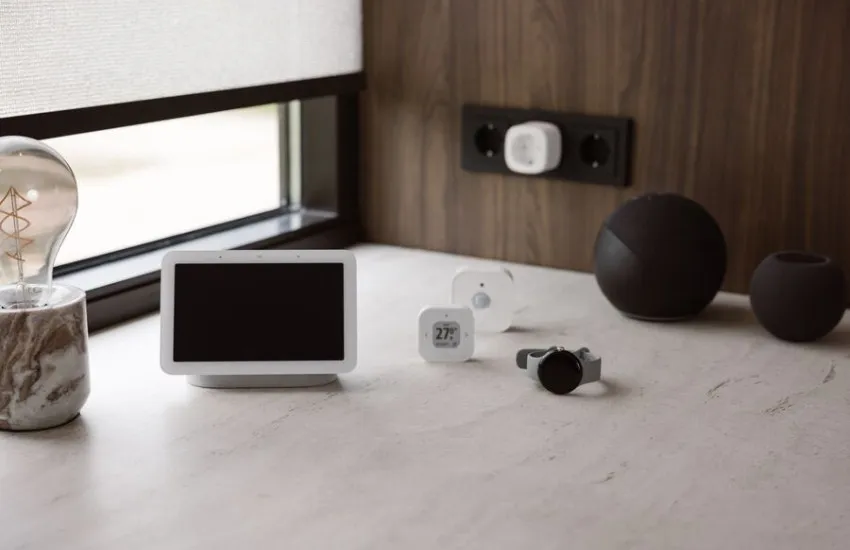
For Thread-first setups (Apple HomePod mini, Apple TV 4K, Google Nest Hub Max, etc.): Eve Motionblinds is the only motorized shade system that operates natively on Thread. It creates a local mesh, responds faster, and continues to function during internet outages.
For mixed blind type homes: Motionblinds is the most practical single-system answer, covering roller, honeycomb, venetian, roman, vertical, and curtain systems under one protocol and one app. Find a retailer at motionblinds.com/stores.
This article reflects information available in June 2026 and is accurate to the best of our knowledge. Product specifications, platform integrations, and third-party brand features are subject to change without notice. We recommend verifying current details directly with manufacturers before making a purchase decision.
FAQ - Motorized Shades That Work With Smart Home Systems
Motionblinds with the Motionblinds Matter Wi-Fi Bridge or Eve Motionblinds motors offer native Matter integration with Apple Home — no cloud workarounds required. Lutron Serena and Hunter Douglas PowerView also support Apple Home via their own proprietary bridges.
Yes. Motionblinds is the official smart shading partner of Home Assistant and integrates via Matter using either the Motionblinds Matter Wi-Fi Bridge or Eve Motionblinds. SmartWings also works with Home Assistant via Matter.
Thread is a low-power mesh networking protocol built into Eve Motionblinds motors. Unlike Wi-Fi, Thread creates a self-healing local mesh that continues to work during internet outages. It also draws less power than Wi-Fi, which extends battery life. Eve Motionblinds is currently the only motorized shade system operating natively on Thread.
Yes, in different ways. Motionblinds Bluetooth motors run locally stored timers without internet. Eve Motionblinds operates as a Thread local mesh — full automation and control continue during internet outages. The Motionblinds Matter Wi-Fi Bridge also retains basic local function without internet.
Hunter Douglas PowerView supports Apple Home, Google Home, and Alexa via the PowerView Hub. Samsung SmartThings and Home Assistant integration is limited. The system is proprietary, which constrains third-party integration relative to Matter-based alternatives.
Eve Motionblinds motors have Matter and Thread built in and do not require a Motionblinds Bridge. However, they do require a compatible smart home hub acting as a Thread border router. There is no motorized shade system that integrates with smart home platforms with zero additional hardware.
Motionblinds via the Motionblinds Matter Wi-Fi Bridge and Eve Motionblinds both support Samsung SmartThings via Matter. SmartWings also supports SmartThings via Matter. Lutron Serena and Hunter Douglas PowerView have limited SmartThings support.
Related blogposts