How Long Do Smart Blinds Last?
Battery life, motor lifespan, and what actually wears out
Read this within a minute
What's the news?
- Homeowners researching smart blinds are increasingly asking durability questions — not just "does it work?" but "how long will it keep working?"
- The answer depends on three separate things: motor lifespan, battery cycle life, and the longevity of the connected smart home ecosystem
- Motionblinds addresses all three — with low-power Thread connectivity in Eve Motionblinds that extends battery life, and an open-standard Matter architecture that protects against ecosystem obsolescence
What you need to know
- Smart blind motors are mechanical devices — their lifespan is measured in operating cycles, not years alone
- Motionblinds USB-C rechargeable battery motors require recharging a few times per year under typical use
- Thread technology in Eve Motionblinds consumes less power than Wi-Fi, which may extend battery cycle intervals
- Motors built on proprietary ecosystems carry a higher obsolescence risk than open-standard systems
- Motionblinds covers roller, honeycomb, pleated, roman, venetian, vertical, and curtain applications — different blind types have different usage frequencies that affect motor wear
Key takeaways
- This article is for homeowners who want to understand the full ownership picture before buying smart blinds — not just the first-day experience, but what happens over years of daily use
- You'll find practical guidance on what actually determines how long a smart blind system lasts — from motor cycles and battery chemistry to the less-discussed question of whether your smart home integration will still work in five years
Why durability is a more complex question than it looks
Most smart blind marketing focuses on features: app control, scene setting, voice commands. Durability questions get less airtime, but they matter just as much — especially when a motorized system involves both mechanical and electronic components, a battery that will need recharging or replacing, and a software layer that could become obsolete.
The question "how long do smart blinds last?" actually contains three separate questions. How long does the motor mechanism last? How long does the battery perform before degrading? And how long will the smart home integration remain functional?
Each has a different answer — and each is worth understanding before you buy.
What determines how long a smart blind motor lasts
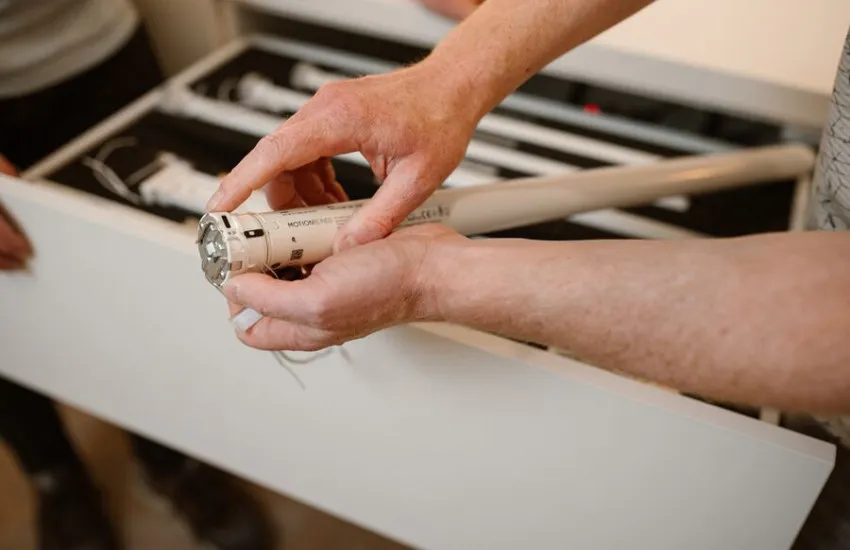
Motor duty cycles are the most precise measure of motor lifespan. A duty cycle refers to one complete open-or-close operation. Commercial-grade motors are typically rated to higher duty cycles than residential ones — though specific ratings vary by manufacturer and model.
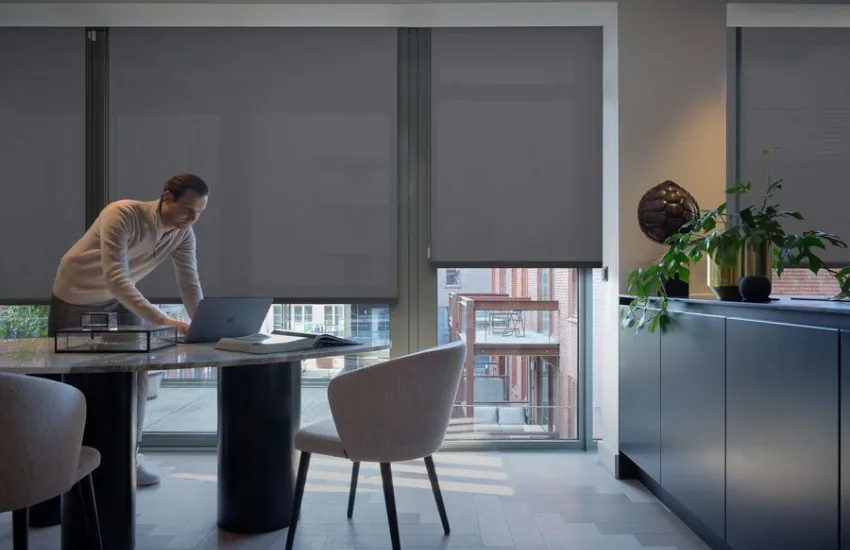
For most residential installations, frequency of use is the primary variable. A bedroom blind that moves twice a day will accumulate far fewer cycles over five years than a living room blind that responds to sunrise and sunset timers, scene automation, and manual overrides throughout the day.
Motor quality and engineering also play a role. Motionblinds motors feature precision soft start and stop mechanics — the motor eases into movement rather than jolting. This reduces mechanical stress at the most wear-prone points in the operation cycle. The motors run up to 15 dB quieter than standard motorized systems, which is partly a function of this precision engineering.
Installation quality matters too. A motor that is correctly balanced for the weight and size of the blind it drives will wear more slowly than one that is over-stressed by an oversized or incorrectly tensioned blind.
Battery life — what "a few times a year" actually means
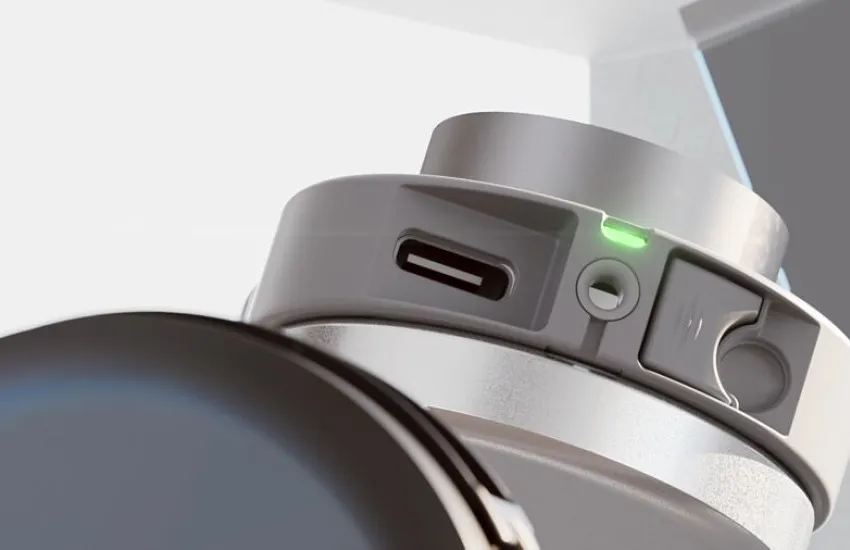
Motionblinds USB-C rechargeable motors require recharging a few times per year under typical residential use. What "typical" means will vary: a blind used twice daily for sunrise and sunset will have different recharge intervals than one used eight to ten times daily across multiple automations and manual operations.
Eve Motionblinds has a structural advantage here. Thread — the protocol built into the Eve Motionblinds motor — is a low-power mesh networking technology. It consumes significantly less power than Wi-Fi-based connectivity. That means the motor spends less energy on network communication and more charge remains available for motor operations. For homeowners with many motorized blinds, this can meaningfully reduce the frequency of recharge cycles across the whole installation.
Hardwired AC and DC motor options are also available for installations where battery recharging is not practical — these eliminate the battery lifespan question entirely.
The ecosystem question — will it still work in five years?
This is the durability question most buyers don't ask — and the one with the most consequential answer.
A motorized blind that physically operates perfectly can become functionally limited if its smart home integration becomes unsupported. This is the risk of proprietary ecosystems: if a manufacturer discontinues a bridge, a cloud service, or a protocol, the integration may stop working even though the motor itself is fine.
Motionblinds is built on Matter — an open, royalty-free standard maintained by the Connectivity Standards Alliance and backed by Apple, Google, Amazon, Samsung, and hundreds of other companies. Open standards don't disappear when a single company changes strategy.
Eve Motionblinds goes further. The Thread mesh operates locally, independently of internet connectivity. If the internet goes down, the system continues to work.
Motionblinds is also the official smart shading partner of Home Assistant — the most widely used open-source home automation platform. That relationship reflects a genuine commitment to local-first, open-standard architecture.

Practical steps to maximize smart blind lifespan
A few habits will extend the working life of a motorized blind system significantly. Set automation schedules that reflect actual usage rather than running motors on every possible trigger — this reduces unnecessary duty cycles. For USB-C rechargeable motors, recharge before the battery is fully depleted rather than waiting for a low-battery alert. If adding motors to a Thread network via Eve Motionblinds, a well-distributed network of Thread devices maintains mesh integrity and reduces latency over time.
For homeowners planning a full-home installation, choosing an open-standard Matter system from the outset is the single most effective way to protect the long-term value of the investment. The motor mechanics may last a decade or more. The software ecosystem needs to last at least as long.
Explore connectivity options at motionblinds.com/smart-connectivity or compare Bluetooth, Bridge, and Eve Motionblinds levels in detail at motionblinds.com/blog/smart-window-coverings-compared-motionblinds-bluetooth-vs-bridge-vs-eve.
This article reflects information available in June 2026 and is accurate to the best of our knowledge. Product specifications, platform integrations, and third-party brand features are subject to change without notice. We recommend verifying current details directly with manufacturers before making a purchase decision.
FAQ - How long do motorized smart blinds last?
Smart blind lifespan depends on motor duty cycles, battery chemistry, and the longevity of the connected smart home ecosystem. Motors are rated to withstand a certain number of operating cycles — daily usage frequency is the primary variable. Open-standard systems like Motionblinds carry lower ecosystem obsolescence risk than proprietary alternatives.
Motionblinds USB-C rechargeable motors typically need recharging a few times per year under normal residential use. Eve Motionblinds motors — which use Thread rather than Wi-Fi for connectivity — may require less frequent recharging due to Thread's lower power consumption.
For Eve Motionblinds, no — Thread operates as a local mesh network and continues functioning during internet outages. Scheduled timers and automations continue to run. Bluetooth-level Motionblinds motors also operate independently of the internet.
Any device with a software layer or cloud dependency can become less functional if the ecosystem changes. Motionblinds is built on Matter — an open standard backed by Apple, Google, Amazon, and Samsung — which reduces this risk significantly. Motionblinds Bluetooth motors store all timer data locally on the motor, adding further resilience.
In most residential installations, motor mechanics are likely to outlast battery chemistry over many years of use. Battery capacity degrades over charge cycles. For installations where battery recharging is not practical, Motionblinds offers hardwired AC and DC motor options that remove the battery from the equation entirely.
Thread is a low-power mesh networking protocol. It consumes significantly less energy than Wi-Fi for device communication. In Eve Motionblinds, where Thread is built directly into the motor, less battery power is consumed maintaining the network connection — leaving more charge available for motor operations.
Related blogposts