How do smart blinds get power?
Battery, solar, or wired — here's what each option actually means for your home.
Read this within a minute
What's the news?
-
Smart blinds no longer require an electrician or wall wiring — USB-C rechargeable battery motors are now the most popular installation choice for homeowners
-
Solar panels designed for indoor use can extend battery life significantly, reducing maintenance to near zero in the right conditions
-
Hardwired AC and DC options are available for high-end residential, commercial, and large-scale installations — and connect with KNX, Matter, Control4, Loxone and more
What you need to know:
-
Motionblinds USB-C rechargeable battery motors typically last six to twelve months on a full charge, depending on blind size and usage frequency
-
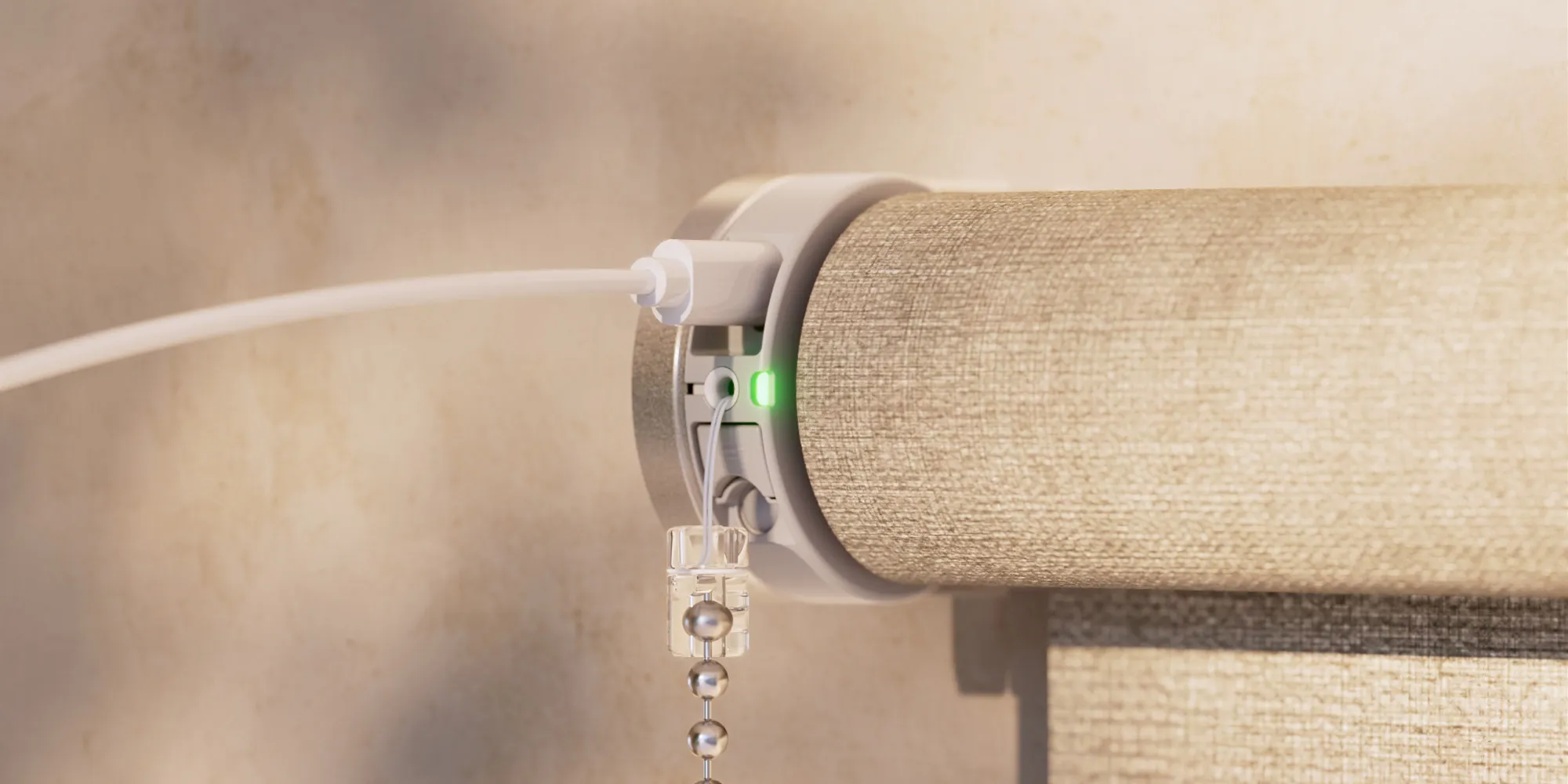
Charging takes approximately eight hours with a standard USB-C cable and 5V/2A charger — and the motor remains fully functional while charging
-
The battery version is completely cable-free — no electrician needed, no wiring, no wall outlets required
-
Solar panels can be added to extend battery life, using daylight through the window itself to keep the motor charged
-
Hardwired AC and DC wired motor options connect with KNX, Matter, Control4, Loxone and more — suited for high-end residential, commercial, and large-scale installations
-
All Motionblinds power options deliver the same motor performance — up to 15 dB quieter than standard motorized systems, with precision soft start and stop
- The Motionblinds Upgrade Kit can retrofit most standard roller blind tubes regardless of which power option you choose
Key takeaways
- Power source is one of the first practical decisions in any smart blind purchase, yet it is often treated as an afterthought. Whether you are furnishing a rental, renovating a forever home, or speccing a new build or commercial project, the right choice depends on your installation conditions, how often you want to perform maintenance, and how your building is wired.
- This article covers how each power option works, what maintenance it involves, and which scenarios each is best suited for — with specific detail on how Motionblinds handles each approach.
Why power source matters more than most people expect
The appeal of smart blinds is automation and convenience. A blind that has run out of battery and stopped working in the middle of the night is the opposite of that. Choosing the right power source from the start determines how reliable and maintenance-free the system actually is in practice.
Power source also determines installation complexity. A battery-powered motor can be mounted by a homeowner in an afternoon. A hardwired system may involve routing cable through walls or ceilings, which changes both the cost and the scope of the project considerably.
There is no universally best option. South-facing windows in a well-lit home make a strong case for solar. High-end residential properties, commercial buildings, and large-scale installations suit hardwired. Rentals, retrofits, and spaces where a cleaner look matters most are where battery power earns its place.
The smart part of a smart blind — the scheduling, automation, and smart home integration — is entirely independent of power source. All three options deliver the full Motionblinds feature set.
USB-C rechargeable battery: the cable-free default
Battery-powered motors are the most popular choice for good reason. There are no electricians, no wall outlets, and no visible cords or cables. The blind looks clean from installation day one.
Motionblinds USB-C rechargeable battery motors typically last six to twelve months on a full charge, depending on blind size and how frequently the blind operates. Charging takes approximately eight hours with a standard USB-C cable and 5V/2A charger — the same connection used for most laptops and phones. Charging happens in place without removing the motor from the blind, and the motor remains fully functional throughout the charging process.
This is also the most rental-friendly option. No permanent modifications, no wiring, and the blind can be removed and reinstalled at the next property without losing any functionality.
The trade-off is the recharge cycle itself. A reminder in your calendar once or twice a year handles it for most households. If you prefer a system that never requires manual intervention, the solar option is worth considering.
Solar: near-zero maintenance in the right conditions
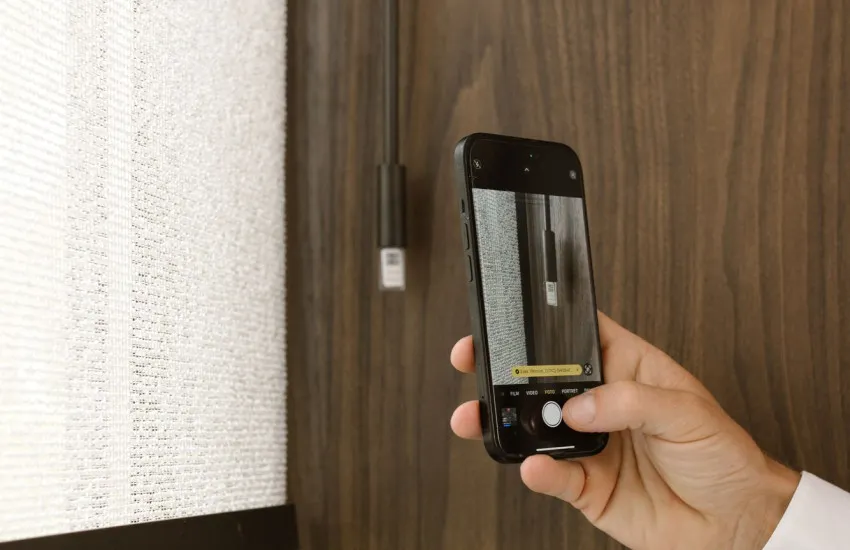
Solar panels for smart blinds are not the large rooftop panels most people picture. They are compact, low-profile units that attach to the window area and convert daylight — not direct sunlight specifically — into a continuous charge for the motor's battery.
Motionblinds solar panels are designed to extend battery life, reducing the need for manual recharging. In windows with consistent light exposure, the combination of solar and battery creates a system that effectively runs itself. Even during a stretch of overcast days, the stored charge in the battery continues to power the motor normally.
Solar panels work best on windows that receive regular daylight exposure — south or west-facing rooms in most US and European climates. North-facing rooms, basement windows, or heavily shaded installations may not generate enough charge to offset usage, making battery-only or wired power a more practical choice in those specific situations.
For homeowners who want automation without maintenance, solar is the closest thing to a set-and-forget option currently available.
Choosing the right power option for your home
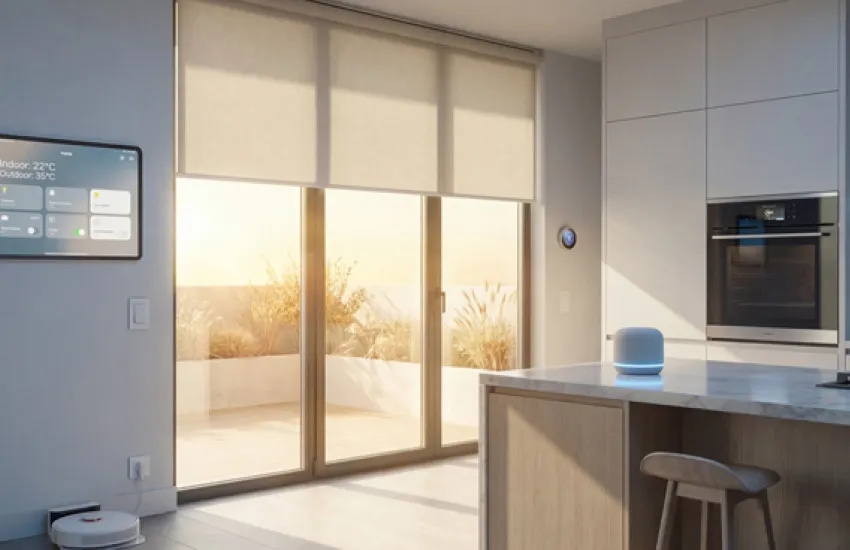
The decision comes down to three practical factors: your installation situation, your tolerance for maintenance, and the scale and type of project.
For most homeowners installing smart blinds in an existing home, the USB-C rechargeable battery is the right starting point. It installs without any electrical work, looks completely cable-free, and requires minimal upkeep — a recharge once or twice a year under typical use. The Motionblinds Upgrade Kit makes this option accessible even for standard roller blind tubes already in place.
Adding a solar panel makes sense when the window receives enough daylight to keep the battery topped up. In those conditions, the system moves from low-maintenance to near-zero maintenance, and the addition is straightforward.
Hardwired is the right answer for high-end residential builds, commercial projects, hotels, offices, and any installation where continuous power and integration with building automation systems are required. It takes more planning and professional involvement for the wiring, but the result is a completely invisible power solution with no battery management and full connectivity to systems like KNX, Control4, and Loxone.
All three options are available across the Motionblinds product range. For a full overview of the range and where to find a dealer near you, visit motionblinds.com/stores. For commercial and large-scale projects visit motionblinds.com/commercial.
Frequently Asked Questions
Motionblinds USB-C rechargeable battery motors typically last six to twelve months on a full charge, depending on blind size and how frequently the blind operates. Larger, heavier blinds and more frequent daily use will reduce battery life. A reminder once or twice a year covers recharging for most households under normal use.
Charging takes approximately eight hours with a standard USB-C cable and 5V/2A charger. The motor remains fully functional while charging, so the blind continues to operate normally during the charging process. Charging happens in place — there is no need to remove the motor from the blind.
Yes. The Motionblinds battery version is completely cable-free and requires no electrical work. It is designed for DIY installation — no wall outlets, no wiring routes, and no professional installation required.
AC motors connect to standard mains voltage. DC low-voltage motors run on a lower power supply that is easier to route discreetly through walls and ceilings — a common specification for new builds and commercial projects where wiring is planned from the start. Both eliminate batteries entirely and connect with KNX, Matter, Control4, Loxone and more for advanced building system integration.
No. All Motionblinds power options — battery, solar-assisted, and hardwired — deliver the same connectivity features. Bluetooth, Wi-Fi Bridge, and Eve Motionblinds (Matter and Thread) are all independent of how the motor is powered. You can have a fully Matter-native, Apple Home-compatible installation running on a USB-C battery motor.
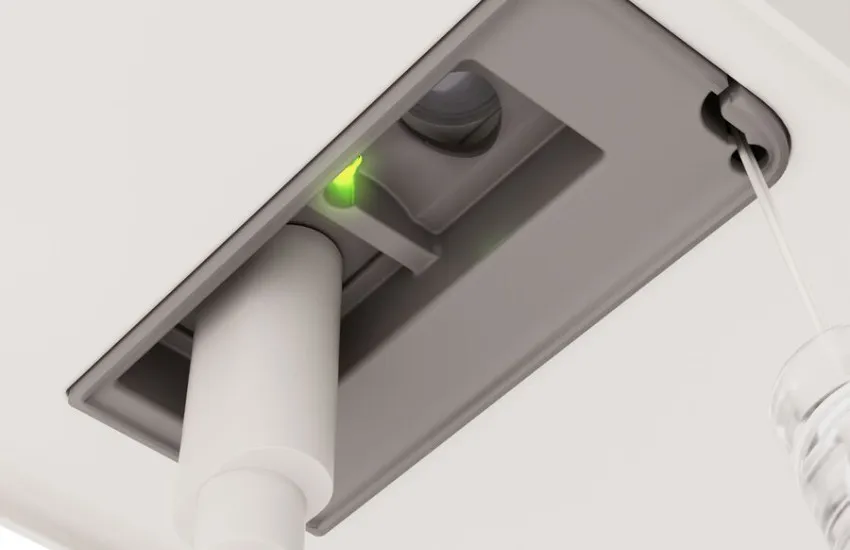
If a Motionblinds battery motor is fully depleted, the blind can be operated manually using the pull and program button on the motor. Recharging with the USB-C cable restores full smart functionality. The motor's app-based battery status indicator and low-battery LED signal give advance warning before the battery reaches zero.
For windows with consistent daylight exposure, solar panels offer a meaningful reduction in maintenance — moving from a recharge once or twice a year to near-zero intervention. For rooms with limited natural light, the battery-only approach is more practical. The solar panel works alongside the motor's internal battery rather than replacing it, providing a continuous top-up charge when light conditions allow.
Related blogposts